Heat‑Strengthened Glass
Heat‑strengthened glass is thermally‑treated glass positioned between ordinary annealed glass and fully toughened glass, with surface compressive stress ranging from 24 MPa to 69 MPa. Also widely referred to as semi‑tempered glass in global architectural glazing markets, this intermediate thermal‑treatment product fills an important technical gap between fully annealed float glass and high‑stress fully toughened glass, delivering a well‑balanced combination of mechanical performance, thermal stability and outstanding optical quality that cannot be easily achieved by other monolithic glass variants. In modern commercial and residential construction projects across the world, architects, facade consultants, engineering contractors and international procurement specialists are increasingly specifying heat‑strengthened glass for large‑scale exterior building envelopes, as it addresses many long‑standing pain points of traditional fully toughened glass, most notably spontaneous breakage triggered by internal microscopic impurities. Manufactured on the same tempering furnace equipment as fully toughened glass, heat‑strengthened glass follows a similar heating workflow: raw float glass panels are heated up to near‑softening temperature inside the tempering oven, yet the subsequent quenching cooling phase adopts much lower air pressure and slower cooling velocity, which creates moderate surface compressive stress instead of the high‑stress status generated for standard safety‑grade toughened glass. This precisely‑controlled stress distribution defines all its core physical features, covering mechanical strength performance, flatness and optical behaviour, thermal shock resistance, fracture pattern, processing limits and long‑term service reliability. Its core characteristics are listed as below:
Mechanical Strength
It reaches 1.5‑2 times the strength of ordinary annealed glass. Its wind‑pressure resistance and impact resistance outperform standard glass, yet its strength is roughly half of fully toughened glass. Its bending resistance and external‑impact performance are inferior to toughened glass. Under the same thickness condition, monolithic annealed float glass possesses very limited capacity against wind load, external impact and bending deformation, which restricts its application on high‑rise exterior curtain wall systems. Fully toughened glass can reach four‑to‑five‑times mechanical strength compared with annealed glass, however, its extremely high internal stress brings inherent drawbacks including spontaneous breakage risk and visible roller‑wave optical distortion. Heat‑strengthened glass strikes a practical balance within this performance spectrum: it upgrades mechanical properties significantly above basic annealed glass, making it capable of coping with regular wind‑pressure loads for mid‑rise and high‑rise building facades, resisting common accidental impacts from flying debris, seasonal wind‑borne particles and occasional human contact in non‑high‑risk zones. Even so, project designers shall keep in mind that heat‑strengthened glass cannot match the extreme load‑bearing capacity of fully toughened glass. When facing heavy concentrated impact, violent bending force or super‑high wind pressure in coastal typhoon‑prone regions, heat‑strengthened monolithic panels may fracture under loading scenarios where fully toughened glass would remain intact. For this reason, structural calculation and wind‑load simulation are always required during engineering design phases, to verify whether heat‑strengthened glass alone satisfies local building code requirements; for projects with ultra‑high wind‑load demands, laminated composite configurations combining heat‑strengthened glass with interlayer films are normally recommended to boost overall structural safety performance.
Superior Flatness & Minimal Optical Distortion
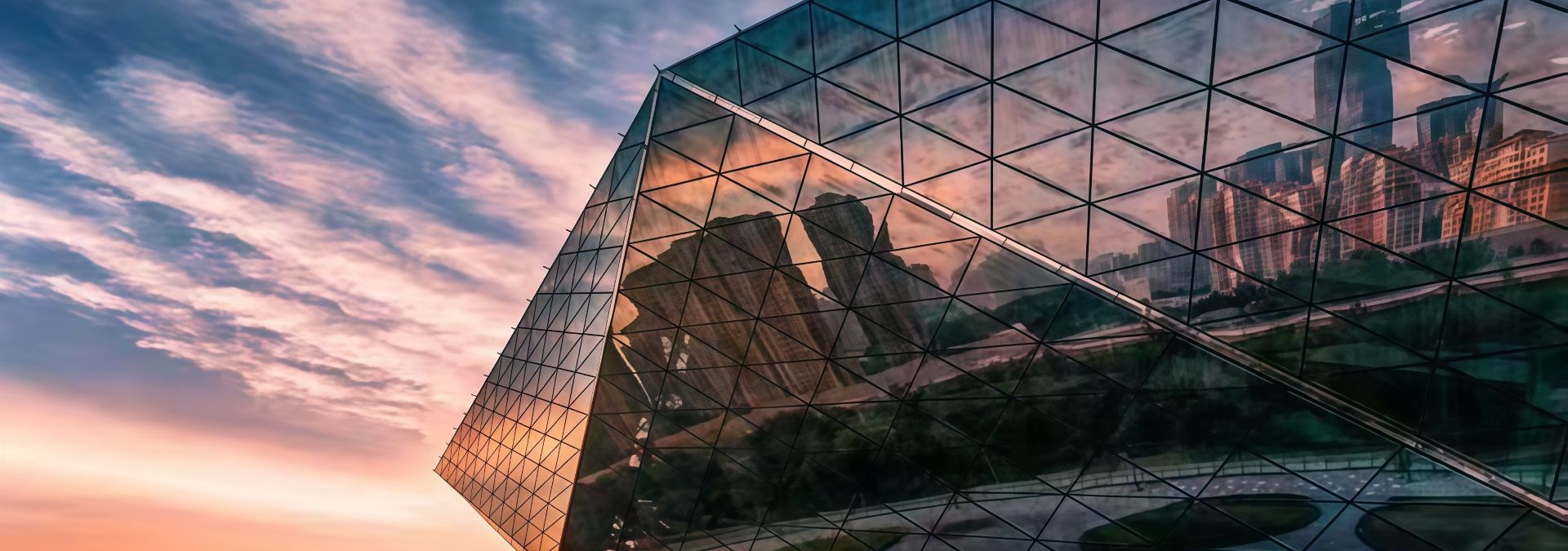
Lower cooling air pressure and gentler temperature reduction are adopted during manufacturing. Therefore, heat‑strengthened glass delivers far better surface flatness compared with toughened glass. Wave distortion and image distortion are greatly reduced. It fits well for large‑area facades, floor‑to‑ceiling windows and coated glass applications, providing superior visual performance. Optical distortion caused by roller wave is a well‑known challenge for thermally treated architectural glass. In the production cycle of fully toughened glass, powerful high‑pressure air jets rapidly cool down both glass surfaces; meanwhile, the hot softened glass panel temporarily contacts conveyor rollers inside the tempering furnace, generating subtle periodic surface undulations. When sunlight or ambient light passes through these wavy surfaces, building exterior reflections will be distorted, creating rippled visual effects on building facades, which is highly undesirable for premium commercial towers, luxury residential high‑rises and landmark architecture pursuing clean, flawless facade aesthetics. Since heat‑strengthened glass applies mild quenching parameters, glass softening degree during thermal treatment is relatively restrained, and surface deformation induced by roller contact is largely suppressed. The finished panels maintain excellent planar flatness, minimizing roller‑wave distortion and image‑reflection deviation. This advantage becomes more prominent when processed with high‑performance functional coatings such as Low‑E silver‑based energy‑saving films. Low‑E coated glass demands extremely stable substrate flatness; any minor surface undulation will be magnified visually after coating deposition. Many global facade designers prefer heat‑strengthened Low‑E insulated glass units for large floor‑to‑ceiling curtain wall panels, where viewers on streets or adjacent buildings can observe crisp, undistorted reflections of surrounding urban landscapes instead of wavy deformed images. For oversized glass panels widely adopted in contemporary modern architecture, this optical merit turns heat‑strengthened glass into a preferred substrate choice for high‑visibility exterior glazing sections.
Virtually No Risk of Spontaneous Breakage
Fully toughened glass carries high internal stress and may suffer spontaneous breakage triggered by nickel‑sulfide inclusions. Thanks to its lower surface stress, heat‑strengthened glass fundamentally avoids spontaneous breakage and achieves higher long‑term service stability. Spontaneous breakage of fully toughened glass remains one of the most troublesome technical risks for global building owners, property management teams and facade contractors. The root cause mostly traces back to microscopic nickel‑sulfide (NiS) inclusions embedded inside float glass raw sheets during melting production. These tiny impurity particles are invisible to naked eyes. During the high‑temperature tempering heating cycle, nickel‑sulfide transforms into its high‑temperature crystalline phase. After rapid quenching of fully toughened glass, this high‑temperature crystal status gets locked within the central tension zone of glass panels. In subsequent months or even multiple years after building completion, nickel‑sulfide slowly converts back to low‑temperature stable crystal form, accompanied by volume expansion. When volume expansion generates local stress exceeding the internal tension tolerance of toughened glass, sudden spontaneous breakage will take place without any external force or warning signal. Industry practical data indicates that ordinary fully toughened glass has a spontaneous breakage rate around 0.3%. Even after heat‑soak testing procedures, residual risk cannot be completely eliminated, only largely decreased. Once spontaneous breakage occurs on high‑rise curtain wall panels, falling glass fragments create severe public‑safety hazards, bringing expensive replacement costs, project‑delay losses and potential liability disputes for real‑estate developers and construction contractors. Heat‑strengthened glass features moderate surface compressive stress and correspondingly low internal tensile stress at the glass core. Even if nickel‑sulfide inclusions exist within glass substrates, the volume expansion force from phase transformation cannot surpass the material’s internal stress threshold to trigger self‑caused cracking. For this critical reason, heat‑strengthened glass achieves virtually zero spontaneous‑breakage probability, greatly lowering long‑term operational risks for exterior glazing systems, especially for high‑rise buildings where post‑installation glass replacement proves complicated and costly.
Good Thermal Stability against Thermal Shock
It can withstand temperature difference of 100‑170 ℃. Under direct sunlight and large day‑night temperature variation, it is much less likely to crack caused by thermal stress than ordinary glass. It is well‑suited for sun‑exposed building exterior windows and curtain wall projects. Thermal stress cracking represents another common failure mode for architectural glazing. When partial glass surfaces receive intense solar radiation and heat up quickly, while edge sections remain at comparatively low temperature concealed inside aluminum frame profiles, sharp temperature difference forms across one single glass panel. If thermal‑shock resistance capacity cannot cope with such temperature gradient, cracks will initiate from glass edges and spread across the whole panel. This failure scenario frequently appears in hot‑summer regions with strong solar irradiance, as well as continental climate zones with dramatic day‑night temperature swings, exactly matching the climate features across extensive areas of Northern China, Central Asia, Eastern Europe and Russia. Ordinary annealed float glass only tolerates limited temperature variation and tends to crack under uneven solar heating. Heat‑strengthened glass, as thermally treated glass material, obtains substantially upgraded thermal‑shock performance, capable of enduring 100 ℃‑170 ℃ temperature differential. When installed on exterior windows, spandrel panels and curtain wall facades under long‑term sunshine exposure, it effectively reduces thermal‑cracking probability. It is worth noting that thermal‑resistance performance of heat‑strengthened glass still cannot reach the level of fully toughened glass. When extreme local hot‑spot conditions occur, for instance concentrated heat radiation from adjacent reflective glass facades, proper architectural measures shall be adopted to avoid excessive local temperature gradients.
Special Fracture Pattern: Not Safety Glass in Single‑piece Form
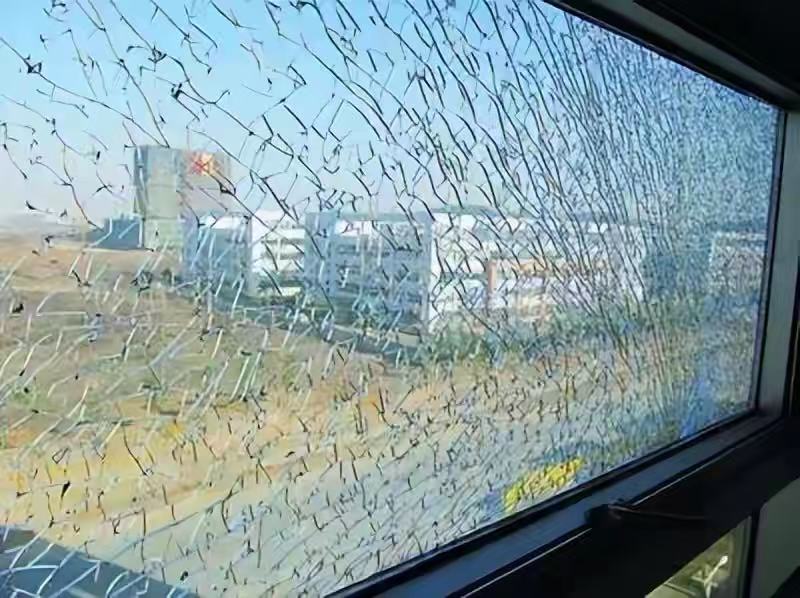
Once broken, it forms radial penetrating cracks with large fragment pieces without tiny granular chippings, and cracks extend to glass edges. When four‑sides fixed within frames, fragments tend to stay in the frame and seldom fall off. Nevertheless, fragment edges remain sharp‑angled. Single‑piece heat‑strengthened glass is NOT safety glass, and shall NOT be applied for skylights or areas where human impact may frequently occur. The fracture characteristic constitutes the most fundamental distinction between heat‑strengthened glass and fully toughened safety glass. When fully toughened glass breaks, high internal stress releases instantly, shattering panels into countless small obtuse‑edged granules, which drastically lower cutting‑injury risk and earn its official safety‑glass qualification under international standards such as EN 12150 and ASTM C1048. By contrast, broken heat‑strengthened glass develops radial penetrating cracks stretching all the way to panel edges, producing relatively large‑size shards with sharp cutting edges. When glass panels are four‑side clamped within aluminium framing systems, fractured fragments can be retained inside frame grooves, so pieces will not freely drop downwards, which delivers certain fall‑prevention benefit for facade glazing. However, monolithic heat‑strengthened glass itself does not meet safety‑glazing criteria. Sharp fragment edges still carry high laceration risk if human bodies collide against broken panels. Therefore, monolithic heat‑strengthened glass is strictly prohibited for overhead skylight roofing, accessible glass balustrades, indoor glass doors and other locations defined as safety‑critical zones by building codes. If designers intend to deploy heat‑strengthened glass for skylight roofs or pedestrian‑contact positions, laminated composite structure is mandatory: heat‑strengthened glass shall be paired with PVB or SGP interlayer films to fabricate laminated glass units. Even when cracks happen, interlayer films hold all broken fragments tightly bonded, preventing fragment falling and personal injury risks, and the composite laminated product can satisfy relevant safety‑code requirements for overhead glazing applications.
Processing & Application Features
It can be further processed into insulated glass or laminated glass. It cannot be cut or drilled like toughened glass; secondary processing will easily lead to cracking. 3C mandatory certification is not required for heat‑strengthened glass. After completing heat‑strengthening thermal treatment, internal stress distribution has been fully established inside glass panels. Any mechanical cutting, hole drilling, edge grinding or notching operations will create new local stress concentration points, which will almost certainly provoke spontaneous cracking of finished heat‑strengthened panels. All shape cutting, hole machining, edge polishing and corner‑notching work must be 100% finished before heat‑strengthening thermal treatment. After heat‑strengthening procedure is completed, only cleaning, coating inspection, insulating‑glass assembly and laminating compounding processing are permitted. Heat‑strengthened glass can be combined with multiple deep‑processing technologies: it can be assembled into multi‑chamber insulated glass units together with other glass substrates, integrating energy‑saving, sound‑insulation and anti‑condensation functions; it can also be compounded with PVB or SGP interlayers to manufacture laminated heat‑strengthened glass, which combines low spontaneous‑breakage merit with fragment‑retention safety performance, widely adopted for high‑end curtain wall and roof‑glazing projects. According to Chinese domestic product regulatory requirements, heat‑strengthened glass is not categorized as safety glass, hence 3C compulsory certification is not mandatory for this product category. Still, for export‑oriented orders, we suggest customers confirm local building‑code requirements in target markets, since different national standards maintain varied classification rules for heat‑strengthened architectural glazing products.
Key Differences Between Heat‑Strengthened Glass and Fully Toughened Glass
1. Stress level: Heat‑strengthened glass 24‑69 MPa; Fully toughened glass ≥90 MPa
The core technical gap originates from surface compressive‑stress value generated during quenching cooling phase. Higher cooling air pressure brings higher surface compression stress. Fully toughened glass must achieve minimum 90 MPa surface compressive stress to satisfy safety‑glass standard specifications. Heat‑strengthened glass adopts milder quenching parameters and is controlled within 24‑69 MPa stress range, which defines all subsequent divergences in strength, anti‑spontaneous‑breakage property, flatness and fracture mode. Our production facility strictly monitors furnace temperature, air‑pressure parameters and stress‑testing sampling for every batch, to guarantee finished panels stay within standard‑compliant stress scope.
2. Spontaneous breakage: Heat‑strengthened glass virtually free from spontaneous breakage; Toughened glass has a spontaneous breakage rate around 0.3%
As elaborated in previous chapters, nickel‑sulfide impurity phase‑transformation‑caused spontaneous breakage is a well‑documented industry challenge for fully toughened glass. Even with heat‑soak ageing treatment, residual risk cannot be entirely eliminated. Heat‑strengthened glass’s moderate internal stress structure fundamentally avoids this failure mode, delivering superior long‑term reliability for large‑volume exterior facade projects.
3. Fracture mode: Heat‑strengthened glass produces large‑piece cracks without particle shattering; Toughened glass breaks into blunt small granules
Fracture pattern directly determines safety‑glass qualification. Fully toughened glass breaks into countless small obtuse granules and obtains safety‑glass certification. Monolithic heat‑strengthened glass creates large sharp‑edged fragments upon fracture, so it cannot be used as standalone safety glazing material. When safety performance is demanded, laminated composite construction shall be adopted.
4. Flatness: Heat‑strengthened glass features superior flatness; Toughened glass is prone to wave distortion
Due to gentler cooling process, heat‑strengthened glass effectively suppresses roller‑wave optical distortion. This makes it the preferred substrate for premium Low‑E coated large‑size facade panels, where visual reflection quality is one of the core project evaluation indicators.
Practical Application Guidance for Global Engineering Buyers
Understanding performance differences helps architects, project contractors and international purchasing teams make rational material‑selection decisions for real‑world building projects. Heat‑strengthened glass excels for scenarios where high‑quality optical performance, low spontaneous‑breakage risk and medium‑level mechanical strength are prioritized. Typical applicable cases include large‑area commercial‑building curtain wall facades, high‑rise residential exterior windows, spandrel hidden panels, oversized floor‑to‑ceiling coated‑glass assemblies, and facade sections pursuing distortion‑free visual effect. For overhead lighting roof and skylight projects, monolithic heat‑strengthened glass shall never be directly applied; customers need to select laminated heat‑strengthened glass composite units to satisfy safety‑fall‑protection requirements. For locations susceptible to frequent human impact such as entrance glass doors, shower enclosures and indoor balustrades, fully toughened safety glass remains the correct material option. Our Aolide Glass engineering technical team provides one‑on‑one material‑selection consulting service for overseas clients. According to local building codes, wind‑load parameters, thermal‑shock environment and aesthetic requirements of target projects, we can recommend suitable glass configuration schemes, including substrate thickness, single‑piece or laminated‑insulated composite structure, interlayer film options and coating solutions. Every batch of heat‑strengthened glass from our factory undergoes strict intermediate‑process inspection: raw‑sheet incoming check, furnace‑parameter monitoring, surface‑flatness visual inspection, destructive stress‑sampling test and dimension‑tolerance measurement, to guarantee finished‑product consistency matching international architectural‑glazing standards. Whether you are sourcing for commercial office towers, luxury residential communities, hotel complex developments or public‑infrastructure building facades, heat‑strengthened glass serves as a competitive technical alternative worthy of full consideration in your glazing‑material comparison list.