

Quick Answer
Custom explosion-proof glass allows you to fit exact dimensions, frames, and protection requirements, while standard-size panels are ready-made but may not perfectly match your project.
Cost comparison:
Standard-size panels: generally lower upfront cost per m², but may lead to wastage, extra installation effort, and suboptimal protection.
Custom panels: higher unit cost, but optimized for size, shape, and blast resistance—can reduce total project cost by 10–25% in real-world scenarios.
1. Why Size Matters in Explosion-Proof Glass Projects
Explosion-proof glass is not a commodity product—it is engineered based on blast load, standoff distance, and project-specific requirements.
Key Considerations:
Oversized panels increase waste, transport difficulty, and risk of breakage.
Undersized or standard panels may require cutting or framing adjustments, adding labor and materials cost.
Multi-layer laminated structures are thickness-dependent, so exact sizing matters for achieving required protection levels.
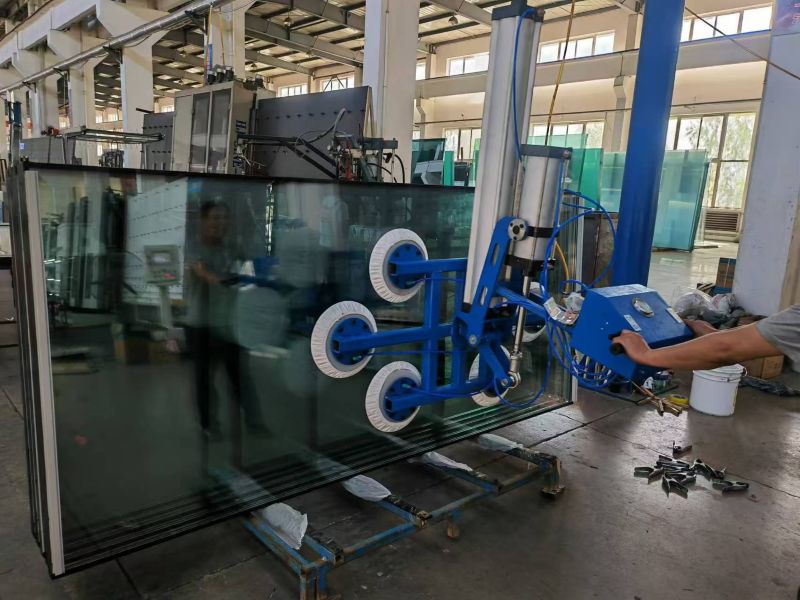
2. Standard-Size Explosion-Proof Glass
Advantages:
Lower unit price (pre-manufactured batches)
Faster availability
Suitable for projects with common dimensions
Limitations:
May require on-site cutting → extra labor and risk
Not optimized for specific frames or openings
Could compromise blast performance if forced to fit
Typical scenarios:
Office partitions
Secondary windows in industrial buildings
Projects with low to moderate blast requirements
3. Custom Explosion-Proof Glass
Advantages:
Engineered to exact dimensions
Optimized multi-layer structure for blast load
Can integrate with frames, coatings, and openings
Impact on Cost:
Material cost is higher per m²
Total project cost can be lower due to less waste, reduced labor, and optimized installation
Lead time typically 20–40 days, depending on volume and complexity
Typical scenarios:
Control rooms in chemical plants
Oil & gas facility windows
Military and defense installations
4. Engineering Insights: Cost vs Safety Trade-Off
| Factor | Standard-Size | Custom |
| Material cost | Lower | Higher |
| Installation cost | Higher (adjustments required) | Lower (fits perfectly) |
| Blast performance | May be compromised | Optimized for safety |
| Wastage | High | Low |
| Lead time | Immediate | 20–40 days |
| Total project cost | Often higher when adjustments included | Often lower with engineering optimization |
Engineering perspective:
A project with exactly measured custom glass avoids over-specification and minimizes hidden costs, often resulting in overall savings despite higher per-unit price.
5. Hidden Costs to Consider
When comparing custom vs standard, most buyers overlook:
Frame adaptation and reinforcement
Transport of heavy, fragile panels
On-site labor for cutting and fitting
Potential rework if standard panels fail safety standards
In real projects, these hidden costs can make standard panels more expensive overall, despite lower upfront cost.
6. How Distributors and B2B Buyers Can Benefit
For distributors and bulk buyers:
Standard panels provide fast inventory turnover, ideal for common projects.
Custom panels provide higher-margin solutions for specialized applications.
A mix of both can maximize market coverage, reduce stock risk, and increase client satisfaction.
7. Real Project Example
In a recent chemical plant project:
Control room windows required exact dimensions to fit reinforced frames
Standard-size panels would have required cutting and risked compromising blast performance
Custom multi-layer laminated glass was selected, resulting in:
15% reduction in total project cost
Compliance with ASTM F1642 and ISO 16933 standards
Faster installation and reduced on-site adjustments
8. How to Decide Between Custom and Standard
Ask yourself:
Does the opening or frame require precise fit?
Are there unique blast protection requirements?
What are the hidden costs of cutting or adjusting standard panels?
If yes → Custom is often the better choice.
If no → Standard panels may be sufficient.
9. Get a Project-Based Solution
To make an informed decision:
Provide your project drawings or dimensions
Indicate the application scenario (control room, oil platform, chemical plant)
Specify the required quantity and protection level
A professional supplier can:
Recommend the correct structure
Optimize cost for your exact project
Provide fast, project-based quotation
Why Work With Us
Expertise in engineering and project-based solutions
Supply for B2B clients, distributors, and engineering projects
Full compliance with ASTM, ISO, and other international standards
Technical specifications and test reports provided upon request
Choosing between custom and standard-size explosion-proof glass is not just a price decision—it is a matter of safety, compliance, and total project cost efficiency.
