

According to the new standard "Safety Glass for Buildings - Part 1: Fire Resistant Glass GB15763.1-2009," issued in 2009, fire resistant glass can be divided into two types based on fire resistance: Class A (insulating fire resistant glass) and Class C (non-insulating fire resistant glass).
What are the differences between Class A and Class C fire resistant glass?
Class A Insulating fire resistant glass: fire resistant glass that meets both fire integrity and fire insulation requirements. This type of glass offers light transmission, fire protection (smoke and fire insulation, and thermal radiation shielding), sound insulation, and impact resistance. It is suitable for decorative steel-wood fire-resistant doors and windows, top lights, partition walls, skylights, smoke barriers, see-through floors, and other building components requiring both transparency and fire resistance.
Class C Non-Insulating fire resistant glass: Single-pane fire resistant glass that meets only fire integrity requirements. This type of glass offers light transmission, fire protection, smoke insulation, and high strength. Suitable for fire resistant glass partition walls, fire-resistant windows, and exterior curtain walls where thermal insulation isn't required.
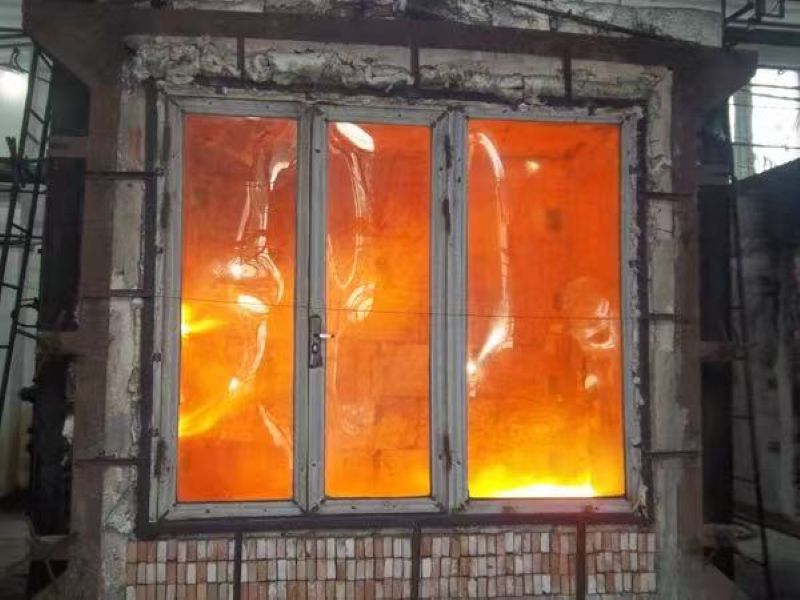
So how do you decide whether Class A or Class C fire resistant glass is right for you? Let's find out!
Based on the usage scenario
Crowded or critical evacuation areas, such as shopping mall atriums, office building evacuation corridors, and hospital corridors, require both flame and heat protection during a fire to ensure safe evacuation. Class A fire resistant glass is the preferred choice.
Non-personnel areas, such as equipment partitions, pipe shafts, and the exterior of curtain walls, require only flame and smoke protection. Class C fire resistant glass can meet basic fire protection requirements while reducing costs.
Define your core needs
If dual protection is required—preventing flames from penetrating while effectively isolating high temperatures to prevent ignition of objects on the other side of the glass—Class A fire resistant glass is the preferred choice, offering both fire-resistant integrity and thermal insulation. If only basic barrier protection—that is, preventing the spread of flames and smoke—is required, and thermal insulation is not a requirement, Class C fire resistant glass can meet this requirement. It only provides fire-resistant integrity.
Reference Performance Parameters
Fire-resistant time: Select the appropriate fire-resistant time based on the building's fire rating requirements. Both Class A and Class C fire resistant glass offer options such as 0.5 hours, 1 hour, and 1.5 hours.
Thermal insulation index: If thermal insulation is required, pay attention to the temperature limit on the back-fire side of Class A fire resistant glass. The average temperature should not exceed 140°C, and the maximum temperature at a single point should not exceed 180°C. Class C fire resistant glass has no thermal insulation index requirement and is not considered.
Check Certification Status
Regardless of whether it's Class A or Class C fire resistant glass, confirm that the product has passed the national mandatory certification. Check key information on the product nameplate, such as the type designation and fire-resistant rating, to ensure product quality meets safety standards.
Selection Principles
Safety first, tailored to your needs: When personnel evacuation and critical equipment protection are involved, Class A is essential; when only basic fire separation is required, Class C is more economical. Be sure to select products that have passed the national mandatory certification and check the type and grade identification on the nameplate.
Why is there no Class B fire resistant glass?
Why are there Class A and Class C fire resistant glass, but no Class B? After years of development, China's fire resistant glass market has diversified. To standardize the market and clarify product categories, the new fire resistant glass specification released in 2009 eliminated Class B fire resistant glass and added fire resistance grades. Class A is more expensive than Class C, and the two have different functions and are used in different building locations.
Aolide can provide Class C fire resistant glass to buyers worldwide, meeting 0.5-hour or 1-hour fire resistance integrity requirements.The quality standard is GB15763.1-2009. Customers with panel requirements can leave a message on our official website, and we will respond as soon as we see your message!
