

For engineers, contractors, and distributors, understanding the lifespan of insulated glass (IGU) is critical for both project planning and long-term ROI. Choosing IGU without considering durability and maintenance leads to early failures, higher operating costs, and reputational risks. This guide provides data-backed insights, risk comparisons, and actionable procurement strategies.
1. Quick Decision Summary
IGU lifespan depends on materials, production quality, installation, and climate
Maintenance cost rises sharply if IGU is under-specified or poorly installed
Certified and optimized IGU reduces total cost of ownership and risk
Lifecycle cost, not upfront cost, should drive procurement decisions
Core Insight: The longest-lasting IGU is not the cheapest, but offers the lowest total cost over its service life.
2. Factors Affecting Insulated Glass Durability
2.1 Glass Type & Composition
Tempered or laminated glass lasts longer than standard float glass
Low-E coatings improve thermal performance and reduce energy-related wear
Gas fills (Argon/Krypton) reduce condensation stress
Impact on Lifespan:
| Glass Type | Expected Lifespan | Maintenance Frequency |
| Standard IGU | 5–8 years | Medium–High |
| Laminated + Insulated + Low-E | 15–20 years | Low |
2.2 Spacer & Seal Quality
Spacer bars (aluminum vs warm-edge) affect thermal expansion
Primary seal (butyl) + secondary seal (polysulfide/silicone) is critical
Poor sealing → moisture ingress → fogging → insulation loss
Impact: 50% of IGU failures are due to poor seal or spacer quality.
Decision Rule: Always verify sealant type and production process before purchase.
2.3 Manufacturing Standards
Certified production ensures dimensional accuracy, edge finishing, and gas retention
Standards to check:
EN 1279 (EU)
ASTM E2190 (US)
Fire rated IGU: EN 1364, ASTM E119
Impact: Non-certified IGU may fail 3–5 years earlier, increasing maintenance costs.
2.4 Installation Quality
Improper handling or framing stresses glass
Thermal expansion without adequate support → seal failure
Misalignment leads to condensation, energy inefficiency
Decision Insight: Installer training and supervision directly affect IGU lifespan.
2.5 Climate & Environmental Conditions
Extreme temperatures → thermal stress
High humidity → condensation → accelerated seal degradation
Coastal areas → salt exposure → corrosion of metal spacers
Climate Optimization Example:
| Climate | Recommended IGU Configuration | Expected Lifespan |
| Cold | Triple glazing + Low-E + Argon | 18–20 years |
| Hot | Double glazing + Low-E + Solar control | 15–18 years |
| Coastal | Warm-edge spacer + laminated | 15–18 years |
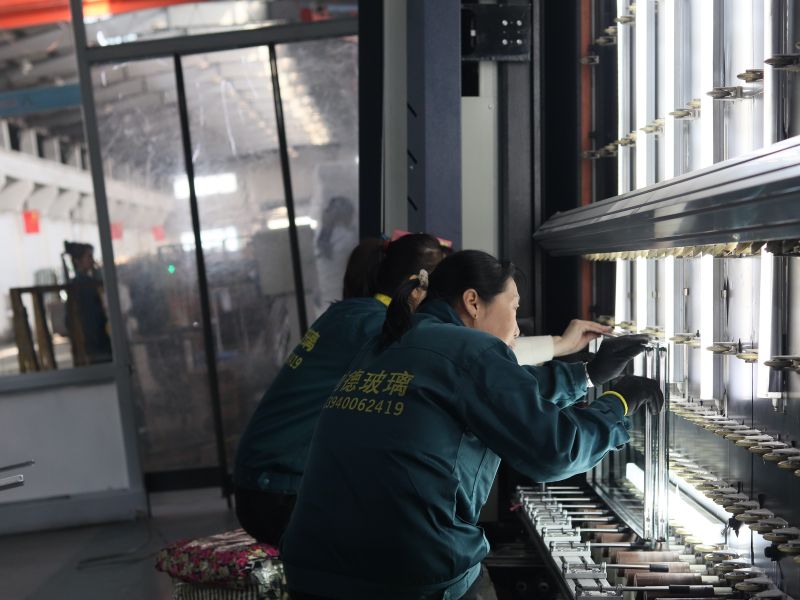
3. Maintenance Cost Analysis
3.1 Regular Inspection
Check seals, gas retention, and glass clarity every 2–3 years
Detect minor condensation before it causes complete failure
3.2 Replacement Cost
Standard cheap IGU replacement: $80–120/m² every 5–8 years
Certified + optimized IGU: $120–180/m² every 15–20 years
Total 15-Year Cost Comparison:
| Glass Type | Initial Cost | 15-Year Maintenance & Replacement | Total 15-Year Cost |
| Cheap IGU | $50/m² | $180/m² | $230/m² |
| Certified IGU | $120/m² | $40/m² | $160/m² |
Insight: Higher upfront cost reduces total lifecycle cost by ~30%.
4. Performance Impact on ROI
Energy Efficiency: IGU with Low-E coatings reduces heating/cooling bills by 20–40%
Guest or Tenant Satisfaction: Noise reduction and temperature stability improve occupancy/usage
Compliance & Risk: Certified IGU avoids code violations and project delays
Procurement Rule: Optimize for long-term performance, not short-term savings.
5. Actionable Procurement Strategy
Define project needs: safety, acoustic, energy efficiency
Select IGU type: laminated, tempered, Low-E, gas fill
Verify production quality & certification
Plan for correct installation & climate adaptation
Compare lifecycle costs, not only initial cost
6. Final Recommendation
Standard commercial IGU: Laminated + Double Glazing + Low-E + Argon
Premium solution for high-performance projects: Triple Glazing + Laminated + Low-E + Warm-Edge Spacers
Avoid IGU with unclear origin, uncertified production, or low-quality seals
Bottom Line: Proper IGU selection minimizes maintenance, energy cost, and risk, maximizing long-term ROI for engineering projects and distribution clients.
