
Low-E (Low Emissivity) insulating glass has become the heart of energy-efficient buildings. As global energy standards tighten, understanding this technology is no longer optional for architects and developers.
In this guide, Aolide, a professional glass manufacturer with 25 years of expertise, breaks down everything you need to know—from scientific principles to procurement tips.
1. What is Low-E Insulating Glass?
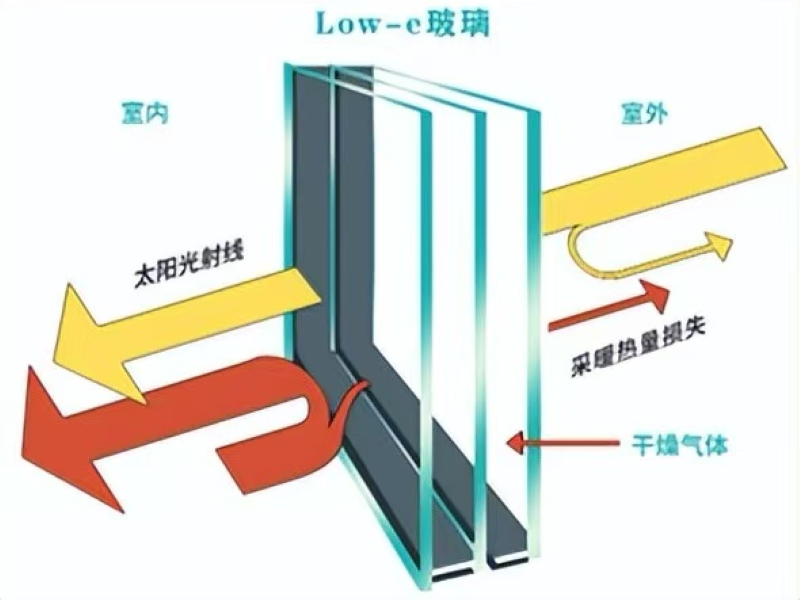
Low-E glass features a microscopically thin, transparent coating—usually involving silver or other metallic oxides—that reflects thermal radiation. When built into an Insulating Glass Unit (IGU), it creates a high-performance barrier that keeps heat where you want it.
2. Scientific Principles: How It Works?
Low-E glass is "smart" because it treats different spectrums of light differently:
Visible Light: It allows natural sunlight to pass through, ensuring interiors remain bright.
Infrared Light (Heat): It reflects long-wave infrared (indoor heat) back inside during winter and blocks short-wave infrared (solar heat) from entering in summer.
Ultraviolet (UV) Light: It blocks over 80-90% of harmful UV rays, preventing carpets, furniture, and artworks from fading.
3. Key Classifications: Hard Coat vs. Soft Coat
Understanding the coating process is vital for choosing the right glass for your project.
Feature | Hard Coat (Pyrolytic) | Soft Coat (Sputtered) |
Manufacturing | Applied while glass is hot (on-line) | Applied in vacuum chambers (off-line) |
Performance | Moderate energy savings | Superior insulation (U-Value) |
Durability | Very durable, scratch-resistant | Delicate, must be used in sealed IGUs |
Aesthetics | Limited color options | Diverse colors & High clarity |
Best Use | DIY or single-pane regions | Professional Engineering & High-end IGU |
At Aolide, we specialize in high-performance Soft Coat Low-E integrated into IGUs to provide the maximum energy efficiency for large-scale engineering projects.
4. Why Choose Low-E Glass? (Core Benefits)
Energy Savings: Reduces HVAC costs by up to 30-50%.
Enhanced Comfort: Eliminates "cold spots" near windows in winter and "hot zones" in summer.
Noise Reduction: As an insulating unit, it significantly cuts down external traffic and city noise.
Privacy & Aesthetics: Aolide offers various coatings that provide one-way privacy while maintaining a sleek, modern facade.
5. Buying Guide: Understanding the Parameters
When reviewing a quote from Aolide, focus on these two metrics:
U-Factor (or U-Value): This measures heat transfer. The lower the U-Factor, the better the insulation.
SHGC (Solar Heat Gain Coefficient): This measures how much solar heat comes through.
Cold Climates: You want a higher SHGC to harvest "free heat" from the sun.
Hot Climates: You want a lower SHGC to keep the interior cool.
6. The Aolide Advantage: Why 25 Years Matters
Choosing Low-E glass is a long-term investment. Here is why Aolide is the preferred partner for architectural projects:
Physical Factory Excellence: We are not a trading company. Every piece of glass is produced in our facility using tier-one raw materials and advanced equipment.
Specialized Focus: We focus strictly on architectural engineering glass. We do not process individual home decoration glass, ensuring our production lines are optimized for large-scale, high-precision project requirements.
Standardized Process: 25 years of industry cultivation has allowed us to realize a standardized, institutionalized, and streamlined workflow, ensuring stable quality for every batch.
7. Crucial Ordering Information
Lead Time: Because Low-E glass is a customized product involving complex coating and tempering, the typical production cycle is 10-15 days.
Tempering Warning: All our Low-E units are tempered for safety. Once produced, they cannot be cut, drilled, or modified. Please verify all dimensions before order confirmation.
Color Selection: We offer a wide range of performance-based colors. Please communicate your aesthetic goals with our team early.
8. FAQ & Common Myths
Q: Does Low-E glass affect indoor plant growth?
A: No. Most indoor plants rely on visible light for photosynthesis, which Low-E glass allows to pass through easily. It only blocks the heat (infrared) and UV rays.
Q: How can I identify Low-E glass with the naked eye?
A: Use the "Lighter Test". Hold a flame in front of the window. In a double-glazed unit, you will see four reflections. On Low-E glass, one of those reflections will be a different color (usually pinkish, bluish, or purple) compared to the others.
Q: Is Low-E glass worth the extra cost?
A: Given the energy savings and the protection of interior assets, the ROI is usually achieved within a few years.
Conclusion
Aolides Low-E insulating glass is the definitive solution for modern, sustainable architecture. By combining 25 years of manufacturing rigor with cutting-edge coating technology, we help you build better.
Explore our full product range: Aolide Low-E Insulating Glass
Contact us today for a technical consultation or a project quote.
