

Energy Saving Glass for Modern High-Rise Facades: What Really Matters
For modern high-rise buildings, a curtain wall is more than just an outer skin — it’s a complex thermal and environmental barrier.
With 25 years of hands-on manufacturing experience, Aolide has analyzed the key technical factors engineers must consider when selecting energy saving glass, especially when balancing light-to-solar gain ratio (LSG) and long-term structural reliability.
1. Spectral Selective Coatings: Looking Beyond U-Value
U-value measures heat loss, but in cooling-dominated climates, SHGC and LSG are often more critical for curtain wall performance.
Why double-silver Low-E matters
Compared to single-silver coatings, double-silver Low-E offers much better spectral selectivity.
It blocks infrared heat while maintaining high visible light transmittance (VLT).
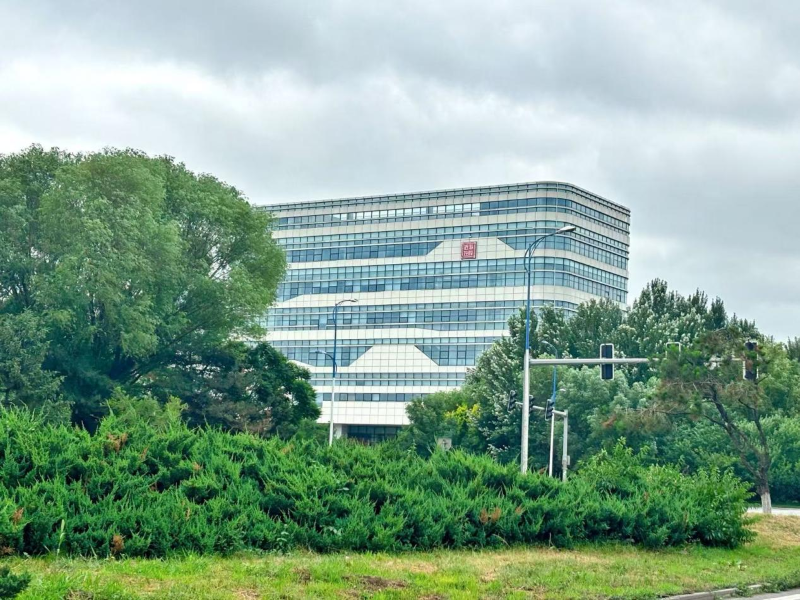
LSG performance
Our high-performance energy saving glass systems are designed to achieve LSG > 1.25.
For a standard 6mm Low-E + 12mm spacer + 6mm configuration, we typically reach:
U-value: 1.2–1.6 W/m²K.
Reduced solar heat gain without sacrificing daylight.
Coating position
To maximize efficiency, our automated production lines place the Low-E coating precisely on surface #2, reflecting solar radiation before it enters the building.
2. Gas Filling Integrity and Convection Control
An insulating cavity is not just “trapped air.”
At Aolide, we use argon (Ar) gas filling to control internal convection and optimize thermal performance.
Why argon works?
Higher density
Lower thermal conductivity
This reduces convective heat transfer inside the unit.
Long-term sealing
A common curtain wall failure point is argon leakage.
We use a dual-seal system:
Primary PIB (polyisobutylene) seal.
Secondary structural silicone seal.
This allows us to meethe t engineering requirements of over 99% gas retention throughout the service life of the unit.
3. Reducing Spontaneous Breakage Risk: HST Process
Energy saving glass used in curtain walls must be tempered to meet wind-load requirements.
What causes the issue
NiS undergoes a phase change (α to β), which leads to volume expansion and potential spontaneous breakage.
Heat Soak Test (HST)
To eliminate this risk, Aolide performs calibrated Heat Soak Testing.
Glass panels are held at controlled temperatures (typically 290°C ± 10°C) to ensure unstable panels fail in the factory, not on the building facade.
HST is a mandatory standard for our high-rise curtain wall projects.
4. Thermal Stress Control and Edge Strength
Energy saving glass — especially Low-E glass — absorbs part of the solar energy, creating temperature differences across the panel.
Thermal stress risk
If the temperature difference between the glass center and shaded edges exceeds tolerance limits, thermal cracking can occur.
Precision pre-processing
Before tempering, we use advanced edge grinding and polishing to remove micro-cracks.
This significantly improves edge strength and allows the glass to handle higher thermal gradients in complex curtain wall designs.
5. Factory-Level Engineering Standards
As a manufacturer with over two decades of experience, our workflow is built around architectural-grade consistency:
Controlled cleanroom environment
Low-E coatings are humidity-sensitive. Our assembly rooms maintain humidity below 20% to prevent coating oxidation before sealing.
Engineering projects only
We focus exclusively on wholesale supply for commercial high-rise buildings and hotel projects. We do not supply glass for individual residential renovations.
Reliable lead time
Optimized production allows us to deliver project-ready units within 10–15 days.
Case:
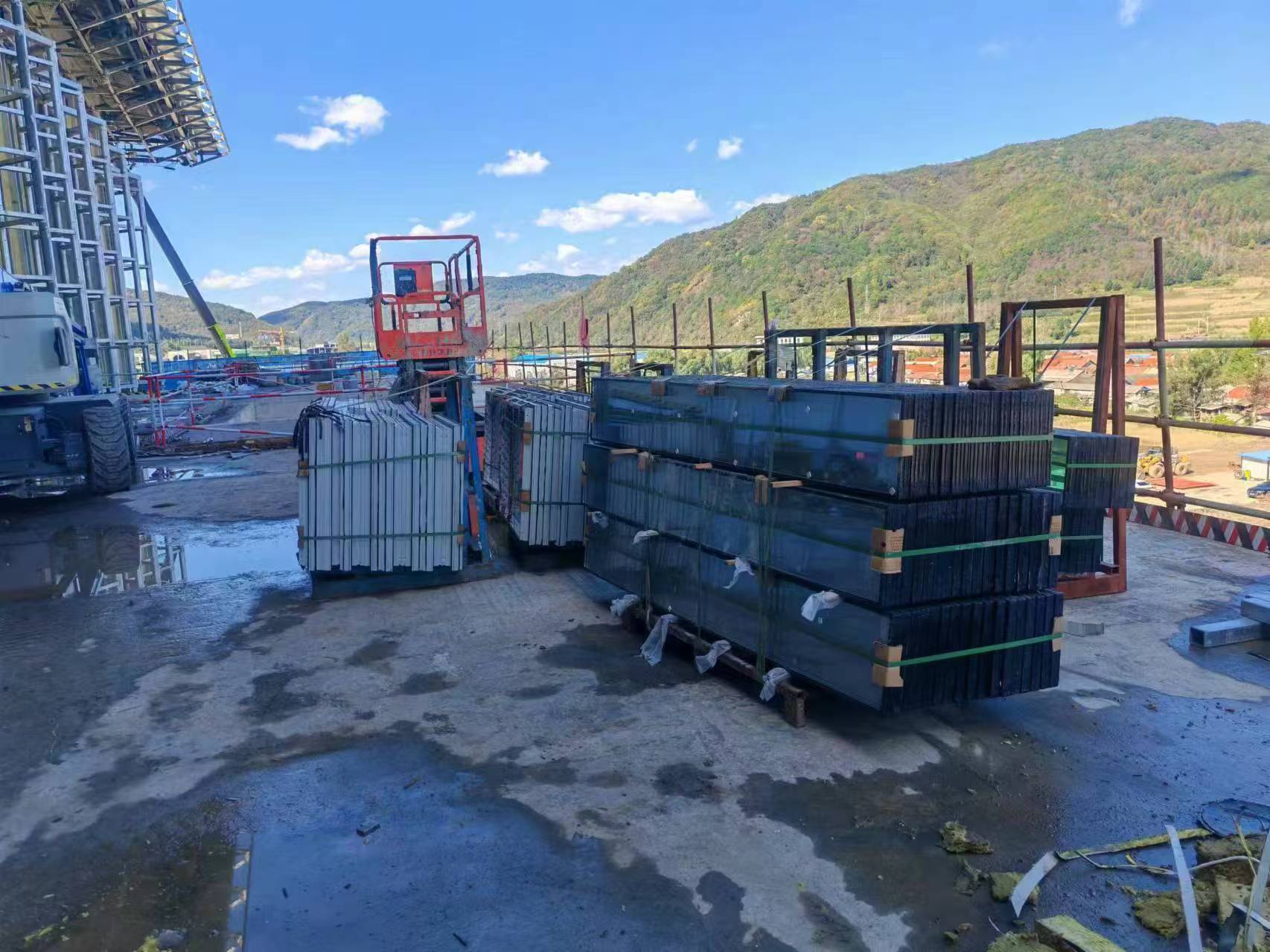
High-speed rail infrastructure project: Aolide supplied curtain wall glass for the station's exterior facade. The image shows the project site. Our products can be used not only in railway projects but also in various construction projects, such as real estate, commercial hotels, and more.
Technical Summary
Energy efficiency in curtain walls is a careful balance between:
VLT (Visible Light Transmittance)
SHGC (Solar Heat Gain Coefficient)
Structural safety and durability
By working with a manufacturer who understands glass behavior down to the material and processing level, engineers can ensure their curtain wall systems meet 2026 energy codes while maintaining long-term reliability.
Contact Aolide for:
Full technical datasheets (U-value, SHGC, SC)
Project-specific structural glass calculations
