

Laminated Glass Applications
Laminated glass is a type of safety glass made from two or more layers of glass with an interlayer material between them. Its structure ensures that even if the glass breaks under external impact, the fragments are firmly bonded by the interlayer, preventing them from flying, effectively preventing injury. Laminated glass also offers excellent sound insulation, heat insulation, UV protection, shock resistance, and theft prevention properties.
Due to these properties, laminated glass has found widespread application in architecture, automotive, and photovoltaics. It not only meets safety and functional requirements but has also become a key material in modern design that balances aesthetics and performance. This article explains the key applications and differences of laminated glass in different scenarios.
PVB Laminated Glass
PVB laminated glass offers excellent safety protection, durability and weather resistance, as well as sound and heat insulation. It also meets designers' aesthetic and creative needs, making it a key material in automotive, architectural, and photovoltaic glass applications.
1. Automotive
Automotive windshields and side windows typically use PVB laminated glass. Windshields typically use 2mm or 3mm thick tempered glass as the laminated glass substrate. This enhances the glass's strength and impact resistance, blocks UV rays, and helps keep the glass fragments bonded when broken, improving passenger safety.
2. Architectural
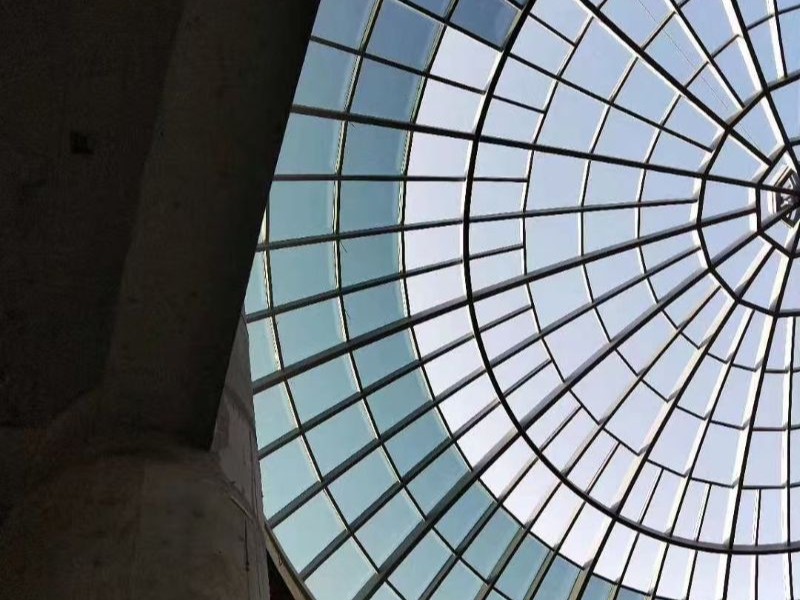
PVB laminated glass is currently widely used in the architectural sector, primarily to provide enhanced safety. It is particularly suitable for high-security public spaces such as schools and hospitals. In architectural design, PVB laminated glass offers greater flexibility and creativity, allowing for customizable shapes, sizes, and colors.
Small glass products such as doors and windows typically use glass substrates with a thickness of 2mm to 3mm, while larger glass products such as skylights and awnings may require glass substrates with a thickness of 5mm to 10mm.
3. Photovoltaic
PVB laminated glass plays a key role in the encapsulation of photovoltaic cell modules. It protects cells from environmental damage such as UV rays, wind, rain, ice, and snow. Furthermore, PVB laminated glass offers excellent insulation and high-temperature resistance, ensuring safe operation of the cells. Its excellent light transmittance and weather resistance ensure that the cells maintain high photovoltaic conversion efficiency over long-term use. With these multiple properties, the use of PVB laminated glass helps improve the efficiency and stability of photovoltaic cells. Furthermore, PVB laminated glass can be used in aerospace, military, and industrial applications, and is also commonly used in places like banks, jewelry stores, and museum display cases.
As a professional glass manufacturer, we are equipped with fully automated production lines and have served numerous architectural curtain wall clients.
If you are looking for a supplier with consistent quality and reliable delivery, or would like a quote, please feel free to contact us.
