

When discussing the best insulating glass, industry professionals do not simply look at glass thickness. Instead, they evaluate the balance between thermal performance (U-value) and solar control performance (SHGC – Solar Heat Gain Coefficient).
The most advanced insulating glass solutions today generally fall into two technology categories.
1. Vacuum Glass vs. High-Performance Insulated Glass Units (IGU)
If you are pursuing the highest possible performance, the current “best” solutions are usually divided into two technology paths.
1. Ultra-Thin Performance: Vacuum Insulating Glass (VIG)
Vacuum insulating glass represents the cutting edge of glazing technology.
It removes nearly all air between two panes of glass, creating a near-vacuum cavity supported by microscopic pillars that are barely visible to the naked eye.
Why It Performs So Well
The vacuum layer eliminates convective heat transfer, which is one of the major causes of heat loss in conventional insulated glass.
Despite being only around 10 mm thick, vacuum glass can achieve an R-value comparable to or even higher than a brick wall.
Ideal Applications
Energy retrofits for older buildings where replacing the window frame is difficult.
Ultra-thin, high-performance architectural designs.
Heritage building upgrades requiring slim profiles.
However, vacuum glass requires extremely precise edge sealing technology, making it relatively expensive. Large panels also require careful control of tempering stress balance during production.
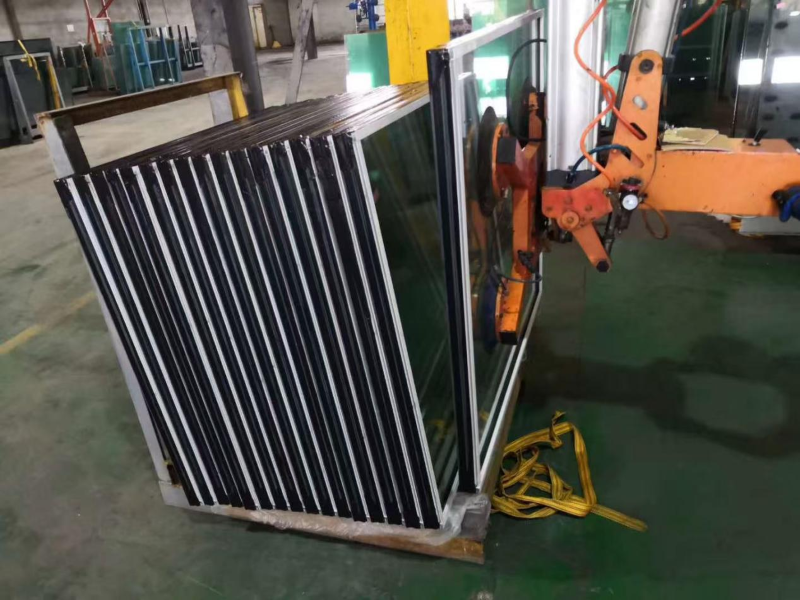
2. Premium IGU: Krypton Gas + Triple Silver Low-E + TPA Warm Edge
For modern high-end window systems, the most advanced configuration often includes:
Krypton Gas Filling + Triple Silver Low-E Coating + TPA Warm Edge Spacer
This combination currently represents the top configuration for high-performance insulated glass units.
Triple Silver Low-E Coating
Compared with single-silver or double-silver coatings, triple-silver Low-E coatings maintain extremely high visible light transmission while reflecting over 90% of infrared heat radiation.
This means excellent insulation performance without sacrificing natural daylight.
Krypton Gas Filling
Most people are familiar with argon gas filling, but krypton gas has even lower thermal conductivity.
In narrow cavities (8–10 mm), krypton can provide over 20% better thermal insulation than argon.
Although krypton is more expensive, it is commonly used in premium window systems and passive house designs.
TPA Thermoplastic Warm Edge Spacer
Instead of traditional aluminum spacers or simple warm-edge spacers, TPA (Thermoplastic Spacer Technology) is extruded directly onto the glass during manufacturing.
This creates a spacer system that combines excellent airtightness with flexibility, allowing the insulated glass to accommodate thermal expansion.
Benefits include:
Longer service life (often 30+ years)
Reduced edge heat loss.
Significantly lower risk of thermal bridging and edge condensation.
2. Choosing the Best Insulating Glass for Your Climate
The “best” glass can actually perform poorly if it is installed in the wrong climate. The optimal configuration depends heavily on regional conditions.
Cold Climate Regions
(Northern China, Northern Europe, Canada, Northern US)
Primary Goal
Retain indoor heat by lowering the U-value.
Recommended Configuration
6 mm Low-E + 12 mm Argon + 6 mm + 12 mm Argon + 6 mm Low-E
Professional Tip
Use dual Low-E coatings on surfaces #2 and #5, combined with warm-edge spacers, to prevent edge condensation in winter.
Hot Climate Regions
(Southern China, Southeast Asia, Florida, Gulf regions)
Primary Goal
Block solar radiation by reducing SHGC.
Recommended Configuration
6 mm Triple-Silver Low-E + 12 mm Argon + 6 mm
Professional Tip
Triple glazing often has poor cost-performance in hot climates.
High-performance double glazing with double-silver or triple-silver Low-E coatings is usually the best solution.
Focus on SHGC below 0.3, which is often more important than U-value in hot climates.
Noise-Sensitive or Urban Locations
Primary Goal
Reduce broadband noise transmission.
Recommended Configuration
Laminated Insulated Glass
Example:
6 mm + 0.76 PVB + 6 mm laminated glass + 12 mm Argon + 6 mm
Professional Tip
Glass thickness should be asymmetrical (for example, 6 mm + 8 mm) to disrupt sound wave resonance.
For areas with heavy truck traffic or low-frequency noise, laminated glass with PVB interlayer is essential. Standard insulated glass alone cannot effectively block low-frequency noise.
3. How to Avoid Buying Low-Quality Insulated Glass
To ensure you are purchasing truly high-performance glass, check the following details.
Check the Low-E Coating Position
Hold a lighter or small flame near the glass and observe the four reflections. If one reflection appears slightly purple or bluish, it indicates the presence of a Low-E coating.
The coating must be inside the insulated cavity, otherwise it will oxidize within months.
Avoid Hand-Applied Edge Sealing
High-quality insulating glass must be produced on fully automated production lines.
If the structural sealant around the glass edge appears uneven or shows visible joints, the sealing durability may be compromised.
Ask How the Argon Gas Was Filled
Low-cost products often drill a hole in the corner and inject gas afterward, which increases leakage risk.
High-end manufacturers use inline gas filling during automated pressing, achieving initial gas concentrations above 95%.
Frequently Asked Questions
Is more glass always better?
Not necessarily.
Going from single glazing to double glazing is a major performance improvement.
Moving from double glazing to triple glazing offers smaller incremental benefits.
Beyond four panes, the weight of the glass can overload window hardware, causing frame deformation and air leakage.
Can argon-filled glass explode?
No. Gas filling actually helps balance internal pressure.
Spontaneous glass breakage usually comes from nickel sulfide inclusions in the raw glass.
Using low-iron glass can reduce the spontaneous breakage rate from about 0.3% to below 0.1%.
Is reflective colored glass a premium product?
Not anymore.
Colored reflective glass (blue, gold, etc.) was widely used decades ago. While it blocks solar heat, it also blocks large amounts of visible light and can create significant glare pollution.
Modern high-performance buildings primarily use Low-E glass with low reflectivity instead.
Why does condensation appear on the edge of my insulated glass?
This usually happens when high-performance glass is paired with a low-quality aluminum spacer.
Aluminum conducts heat very efficiently, allowing indoor heat to escape through the edge.
Always confirm the use of warm edge spacer technology.
Conclusion
The best insulating glass is not the thickest one.
Instead, it is a combination of:
Climate-optimized Low-E coating systems.
High-performance sealing technology (double seal or TPA spacers)
High-purity base glass, such as low-iron glass.
When budgets are limited, high-performance double glazing with triple-silver Low-E coatings will almost always outperform low-quality triple glazing with single-silver coatings.
