

Quick Answer
Insulated glass works by trapping a sealed layer of air or inert gas between multiple glass panes to slow heat transfer.
This cavity reduces conduction, limits air circulation (convection), and can reflect infrared radiation when combined with specialized coatings.
Because of this multi-layer structure, insulated glass significantly improves thermal insulation, indoor comfort, and energy efficiency compared with single-pane glazing.
But the true performance of insulated glass comes not only from the air gap—it comes from the complete system design, including the spacer, sealing technology, gas filling, and optional coatings.
The Core Principle: Controlling Heat Transfer
To understand how insulated glass works, it helps to understand the three ways heat moves through windows:
Conduction – heat passing directly through materials
Convection – heat transfer through moving air
Radiation – heat traveling as infrared energy
Single-pane glass allows all three types of heat transfer to occur easily.
Insulated glass slows each of these processes simultaneously.
| Heat Transfer Type | How Insulated Glass Reduces It |
|---|---|
| Conduction | Gas cavity slows heat movement |
| Convection | Sealed space limits air circulation |
| Radiation | Optional Low-E coatings reflect heat |
This is why insulated glass dramatically reduces energy loss in buildings.
The Structure of an Insulated Glass Unit
Insulated glass is manufactured as a sealed multi-layer unit, commonly called an IGU (Insulated Glass Unit).
A typical IGU contains several key components.
| Component | Function |
|---|---|
| Glass panes | Structural layers that form the glazing |
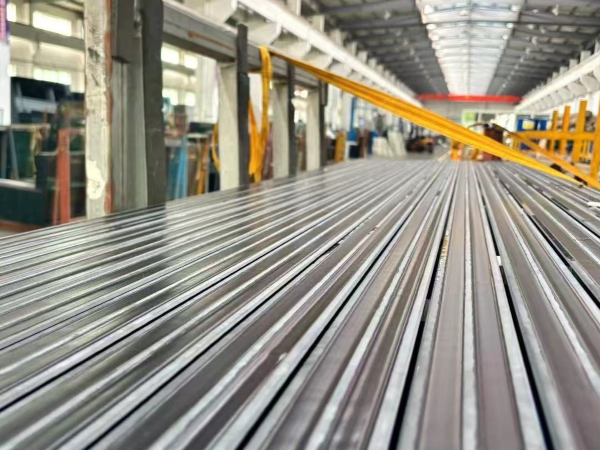
| Spacer bar | Maintains the gap between panes |
| Desiccant | Absorbs moisture inside the cavity |
| Primary seal | Prevents gas leakage |
| Secondary seal | Provides mechanical stability |
| Gas-filled cavity | Improves thermal insulation |
Together, these parts form a closed thermal system that controls air movement and moisture infiltration.
Why the Air or Gas Gap Is Important
The space between the glass panes is the most critical part of the insulated glass design.
Air and inert gases conduct heat much more slowly than solid glass, so this cavity acts as an insulating barrier.
Typical cavity thickness ranges from:
6 mm to 20 mm
If the cavity is too narrow, insulation performance decreases.
If it becomes too wide, internal air circulation can occur, which reduces thermal efficiency.
For this reason, manufacturers carefully optimize the gap size for maximum performance.
The Role of Gas Filling
Many modern insulated glass units replace ordinary air with inert gases.
Common gases include:
| Gas Type | Benefit |
|---|---|
| Air | Lowest cost |
| Argon | Improved insulation performance |
| Krypton | Higher efficiency in narrow gaps |
Argon is widely used because it provides better thermal resistance than air while remaining cost-effective.
These gases reduce the rate at which heat flows through the window, improving overall energy performance.
Low-E Coatings: Reflecting Heat Energy
In many modern buildings, insulated glass is combined with Low-E (low emissivity) coatings.
These coatings are extremely thin metallic layers applied to the glass surface.
Their function is to reflect infrared radiation while allowing visible light to pass through.
This means:
Heat inside a building is reflected back indoors during winter
Solar heat from outside can be reduced during the summer
When combined with insulated glass, Low-E coatings can significantly reduce heating and cooling costs.
Why Insulated Glass Improves Energy Efficiency
Windows are typically the weakest thermal point in a building envelope.
Without insulation, heat moves easily through glass surfaces.
Insulated glass improves efficiency by creating multiple barriers to heat flow.
Compared with single-pane glass, insulated glass can provide:
| Feature | Performance Benefit |
|---|---|
| Reduced heat loss | Lower heating demand |
| Reduced heat gain | Lower cooling costs |
| Improved indoor comfort | Less temperature fluctuation |
| Better sound insulation | Reduced outdoor noise |
Because of these advantages, insulated glass has become standard in modern residential and commercial architecture.
Condensation Control
Another important function of insulated glass is reducing condensation on window surfaces.
When warm indoor air meets a cold glass surface, water vapor condenses.
By increasing the interior surface temperature of the glass, insulated glazing helps prevent this effect.
However, condensation can still occur if:
Indoor humidity is extremely high
Outdoor temperatures drop sharply
In those cases, condensation may appear on the inside surface, but this is different from fogging between the panes, which indicates seal failure.
Where Insulated Glass Is Used
Because of its thermal and acoustic advantages, insulated glass is widely used in modern architecture.
Typical applications include:
Residential windows
Homes commonly use insulated glass to improve comfort and reduce energy bills.
Commercial façades
Office buildings often incorporate large insulated glass panels in curtain wall systems.
Skylights
Insulated glass helps control temperature and reduce condensation in overhead glazing.
Glass doors and storefronts
Retail spaces frequently rely on insulated glass to balance transparency with energy performance.
How Triple Glazing Works
Some high-performance buildings use triple glazing, which includes three panes of glass and two gas-filled cavities.
Triple glazing improves insulation by adding another thermal barrier.
Benefits include:
Higher energy efficiency
Better sound insulation
Reduced condensation risk
However, triple glazing also increases weight and cost, so it is often used in colder climates or energy-efficient buildings.
Frequently Asked Questions
Does insulated glass completely stop heat transfer?
No window can completely stop heat transfer, but insulated glass significantly reduces the rate at which heat moves through the glazing.
Why is the cavity sealed?
Sealing prevents outside air and moisture from entering the space between panes, maintaining insulation performance.
Can insulated glass improve sound insulation?
Yes. The air or gas cavity helps reduce sound transmission compared with single-pane glass.
How long does insulated glass work effectively?
Most insulated glass units maintain good performance for 15–30 years, depending on seal quality and environmental conditions.
Final Thoughts
Insulated glass works by combining multiple physical barriers to heat transfer, including sealed cavities, insulating gases, and optional reflective coatings.
Rather than relying on a single material, the system uses layered engineering to improve energy efficiency, indoor comfort, and acoustic performance.
This is why insulated glass has become a core component of modern building design, especially as global energy standards continue to evolve.
