

Fire-resistant glass plays a significant role in the design of fire protection for buildings. Firstly, it serves as a physical barrier against flames and smoke. The amount of protection provided varies depending on the type and rating of the glass. Generally, the fire-resistant glass industry divides the glass into two categories based on its fire resistance capability: insulated (Class A) and non-insulated (Class C). The insulated glass satisfies both fire resistance and integrity criteria, whereas the non-insulated mainly satisfies fire integrity criteria.
This differentiation is also seen in the product comparisons of the market. For instance, insulated fire-resistant glass can lower the temperature on the non-fire side more during fire resistance tests, thus lessening heat radiation, whereas non-insulated glass primarily concentrates on preserving its structural integrity in a fire.
Performance Comparison Overview
Insulated Fire-Resistant Glass (Class A)
Provides combined fire integrity and fire insulation protection
Minimizes heat transmission, thus helping to keep personnel and equipment safe on the unexposed side.
Is suitable for firewalls, windows, or other places where high fire-resistance is necessary.
Non-Insulated Fire-Resistant Glass (Class C)
Simply needs to satisfy fire integrity
In a fire, it mainly prevents flame and smoke spreading, but does not limit heat radiation
Because it is lighter, thinner, and cheaper to maintain, it can be used in many installation locations without problems.
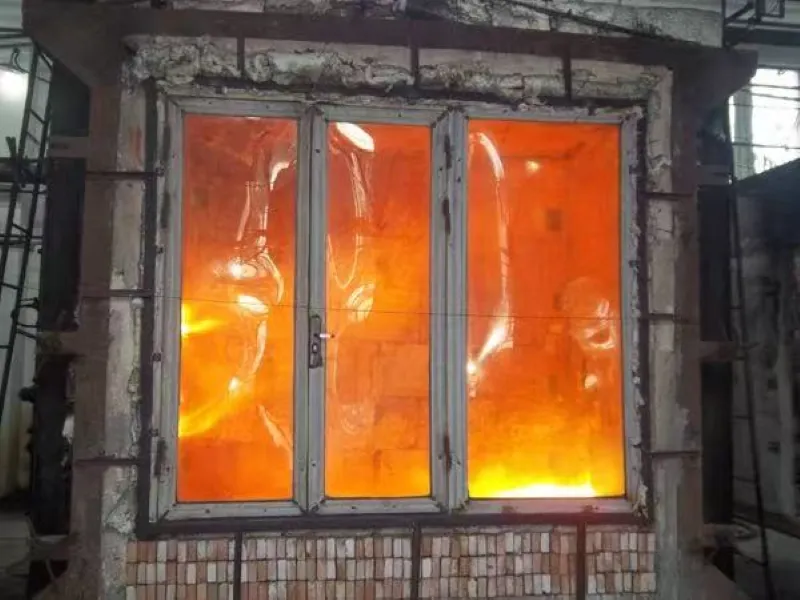
In the realm of industry standards, the term "primary condition of maintaining fire integrity for a specified time," is what non-insulated fire-resistant glass is most often recognized as meeting. The interpretation of this means that if the 30-minute fire-resistant glass test is carried out and no flame penetration takes place on the fire-exposed surface within the 30 minutes, the test result is considered acceptable.
Why Performance Comparison is Important for Buyers
For B2B buyers, knowing the performance differences between the various fire-resistant glasses is the basis for developing procurement strategies. For example, insulated products can be the winning choice in high-risk areas or in projects where there is a high demand for heat radiation control, whereas non-insulated products are more cost-efficient and can be utilized in open space designs or where the basic safety is ensured.
Besides, industry data reveals that fire-resistant glass with different components have fire resistance ratings of 0.5 hours, 1.0 hour, 1.5 hours, and even more. During purchases, care should be taken in choosing the right rating that is in accordance with the building codes and local regulations, non-compliance with the regulations and failing inspections due to the wrong choice of rating may result in more expenses for redoing the work.
Why Choose Aolide 30-Minute Non-Insulated Fire-Resistant Glass?
Since Aolide 30-minute fire-resistant glass is non-insulated, it can achieve a certain fire resistance level. On the other hand, Aolide showed some advantages over other brands in the following areas:
1. Stable and Reliable Core Fire Resistance Performance
The products of Aolide could keep fire integrity even during the first 30 minutes, which is a very crucial phase in a fire situation, and therefore effectively cut off the propagation of the flames and smoke. This is a necessary defensive barrier in the context of a fire-resistant design. Fire integrity tests of this kind are some of the fundamental criteria for fire-resistant glass classification standards.
2. Strictly Manufactured in Accordance with
GB15763.1-2009 Standards
This product is manufactured strictly in accordance with the national standard GB 15763.1-2009 "Safety Glass for Buildings - Part 1: Fire-Resistant Glass," meeting domestic fire-resistant glass integrity requirements and providing authoritative evidence for project acceptance and quality inspection.
There are numerous reasons for fire-resistant glass to remain a technical staple in building codes of different countries and regions because it meets the fire protection requirements, and purchasers simply do not have to be worried about compliance reviews that come after the sale.
3. Non-insulated versions are better suited for diverse project applications
Without insulation, Aolide's fire-resistant glass keeps board of attractive qualities: maintains transparency, remains thin, and offers aesthetic appeal. That is why the product is capable of serving architectural spaces such as building corridors, shopping mall partitions, and factory fire compartments.
Insulated products, which require specific thickness and thermal control designs would... On the other hand, Non-insulated glass generally offers more flexibility in terms of logistics, installation, and cost-control, thereby becoming the preferred solution for standard fire-resistant partition installation.
4. Stable supply and lower maintenance costs
Having its own production plants, Aolide can dependably fulfil custom size requests and large quantity orders, thus meeting the requirements of big at-scale projects. Furthermore, the glass product surface is very resistant to heat, after which it is hardly stained, and in addition to ageing and discoloration, the product has no visible signs, which, altogether reduces maintenance costs significantly and thus increase project cost-benefit.
Procurement Recommendations
Choose Type Based on Project Needs
If a project is aimed at meeting basic fire-resistant requirements and at the same time at cost-saving, then non-insulated fire-resistant glass should be given preference.
If the project location is one in which thermal insulation or high-heat protection is required, then the use of insulated products is justified.
Review Standards and Certification Reports
Try disclosing after procurement that it is a supplier's responsibility to produce standard test reports and certification document materials especially the fire integrity test results, which is the ultimate evidence for project compliance.
Combining Aesthetics and Practicality
These fire-resistant glass products can even work efficiently to simultaneously balance performance and visual elements, thus they are not only good but even suitable for commercial buildings with spatial design requirements.
Purchasers may come to a better decision of the proper materials for their projects when they make use of comparative analyses of different fire-resistant glass types' performance and standard level. Aolide's 30-minute fire-resistant glass, which is considered a cost-efficient and compliant product, will certainly be a proven partner in achieving the basic fire protection necessities of engineering projects.
