
In architectural glazing, selecting "standard clear" versus "low-iron" glass is a decision that impacts both the building's aesthetic and its long-term safety. For procurement managers, understanding the trade-offs is essential to balancing the project budget with high-performance requirements.
1. The Pros of Low-Iron Glass
A. Eliminate the "Green Tint"
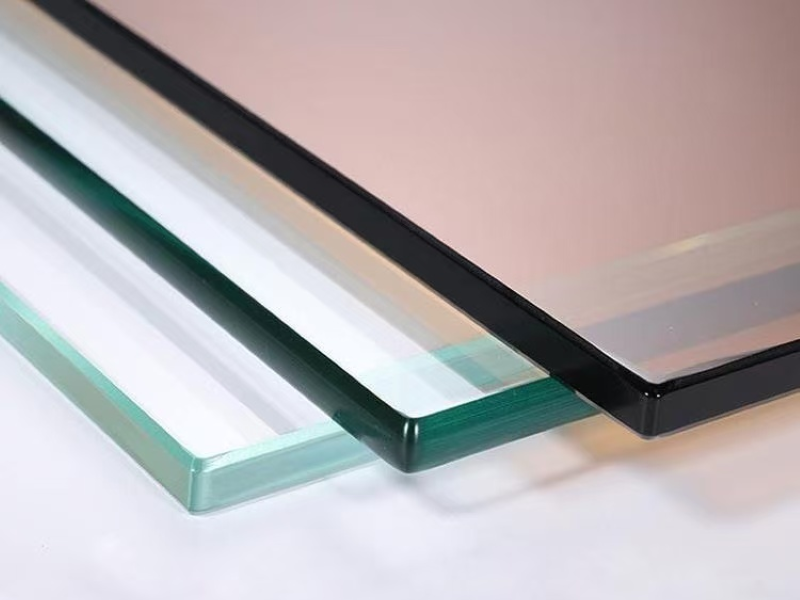
Standard glass contains a higher iron oxide content, which creates a noticeable green hue, especially on the edges or when glass is laminated (multiple layers). Low-iron glass(such as Xinyi or Jinjing Ultra-Clear) reduces iron content from ~0.1% to less than 0.01%.
Decision Value: Essential for glass fins, balustrades, and high-end storefronts where color neutrality is required.
B. Superior Light Transmission (VLT)
Low-iron glass offers a Visible Light Transmittance (VLT) of 91% or higher, compared to ~83-87% for standard clear glass.
Industry Data: This 4-8% increase significantly improves "daylighting" strategies in LEED-certified buildings, reducing the need for artificial interior lighting.
C. Reduced Risk of Spontaneous Breakage
Nickel Sulfide (NiS) inclusions are the leading cause of spontaneous breakage in tempered glass. Because the raw materials for low-iron glass are more highly refined, they contain fewer impurities.
Technical Fact: While it doesn't replace the need for Heat Soak Testing (HST), low-iron glass inherently has a lower risk of spontaneous failure due to the purity of the silica sand used.
D. True Color Rendering
For retail displays (jewelry, luxury cars) and art galleries, color accuracy is paramount. Low-iron glass ensures that the products behind the glass look exactly as intended, without the "filtering" effect of standard glass.
2. The Cons of Low-Iron Glass
A. The Price Premium
Low-iron glass is significantly more expensive to manufacture. The raw materials (high-purity silica sand) are rarer, and the furnace requires higher temperatures to melt, leading to increased energy costs.
Cost Factor: Expect a 25% to 50% price increase over standard clear glass, depending on thickness and volume.
B. Lead Time and Availability
Not all float plants produce low-iron glass year-round. It is often produced in specific "campaigns."
Risk Management: For large-scale projects, procurement must lock in the supply 4-8 weeks earlier than standard glass to avoid site delays.
C. Edge Quality Sensitivity
Because the edge of low-iron glass is so transparent, any chips or poor polishing are much more visible than on standard green-tinted glass.
Quality Standard: Ensure your fabricator uses High-Speed CNC Polishing to maintain the "crystal-clear" look on exposed edges.
3. Decision Summary: Standard vs. Low-Iron
| Feature | Standard Clear | Low-Iron (Ultra-Clear) |
| Color | Greenish Hue | Crystal Clear / Blue-White Edge |
| Transmittance | ~87% | 91.5%+ |
| NiS Risk | Moderate | Very Low |
| Cost | Baseline | Premium (+25-50%) |
| Best Use | Balustrades, Retail, Skylights | Balustrades, Retail, Skylights |
4. Procurement Recommendation
If your project involves thick laminated glass (e.g., 12+12mm) or exposed edges, the green tint of standard glass will become overwhelming. In these cases, low-iron glass is mandatory to maintain architectural quality. For standard small-pane windows, the extra cost may not be justified.
Optimize Your Glass Specification
Unsure if your project requires the premium performance of low-iron glass? Our engineering team provides side-by-side technical comparisons to help you decide.
[Contact Syald Glass for a Technical Quote]
Request a sample kit to see the "Green vs. Clear" difference for yourself.
