

Quick Answer
Insulated glass (often called an IGU – Insulated Glass Unit) is a multi-layer glazing system made of two or more glass panes separated by a sealed spacer and an air or gas-filled cavity.
This structure significantly reduces heat transfer, minimizes condensation, and improves acoustic insulation, which is why insulated glass has become the standard glazing solution in modern buildings.
However, the real value of insulated glass is not simply “two pieces of glass with air between them.” Its performance depends heavily on spacer technology, sealing systems, gas fill, and coating configuration—all of which determine whether the unit lasts 10 years or more than 30 years.
Understanding the Structure of Insulated Glass
An insulated glass unit works because of its layered architecture. Each component plays a specific role in controlling heat, moisture, and structural stability.
Typical IGU Structure
| Component | Function |
|---|---|
| Glass panes | Structural surface and optical clarity |
| Spacer bar | Maintains consistent gap between panes |
| Desiccant | Absorbs residual moisture inside the cavity |
| Primary seal | Prevents gas leakage |
| Secondary seal | Provides structural bonding |
| Gas cavity | Reduces heat transfer |
Most IGUs are built with two panes (double glazing), though high-performance buildings increasingly use triple glazing.
The cavity thickness, typically between 6 mm and 20 mm, is not arbitrary. It is engineered to balance thermal resistance and convection control. If the cavity becomes too wide, natural convection currents inside the gas layer can actually reduce insulation performance.
How Insulated Glass Actually Improves Energy Efficiency
Many explanations stop at “air is a poor conductor of heat.”
While that is partly true, the real mechanism involves three forms of heat transfer:
Conduction
Convection
Radiation
An insulated glass unit addresses all three.
1 Heat Conduction Reduction
The gas cavity acts as a thermal break, slowing heat movement through the glazing system.
2 Convection Control
A sealed cavity limits internal air movement, preventing warm air from circulating freely between panes.
3 Radiative Heat Control
When Low-E coatings are applied, the glass can reflect infrared energy while allowing visible light to pass through.
This combination is why a modern IGU can reduce window heat loss by 50–70% compared to single glazing.
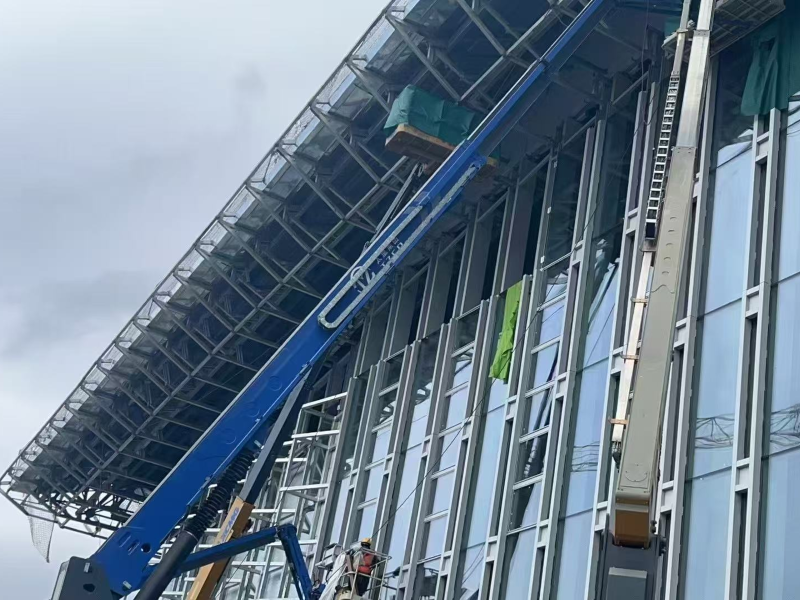
Types of Insulated Glass Systems
Not all insulated glass performs the same. The configuration can vary depending on climate, building type, and performance targets.
Double Glazing
Two panes separated by a sealed cavity.
Typical features:
Standard residential windows
Moderate thermal improvement
Cost-efficient
Triple Glazing
Three panes with two sealed cavities.
Advantages:
Higher thermal resistance
Better acoustic insulation
Reduced condensation risk
However, triple glazing also increases weight, cost, and frame requirements, so it is often used in cold climates or passive-house construction.
The Role of Gas Filling in Insulated Glass
While some IGUs are filled with dry air, higher-performance units often use inert gases.
Common Gas Options
| Gas | Performance Benefit |
|---|---|
| Air | Lowest cost |
| Argon | Improved insulation |
| Krypton | High efficiency in narrow cavities |
Argon is the most widely used because it offers a good balance between performance and cost. Krypton performs better but is significantly more expensive.
Gas retention also depends heavily on the edge sealing system, which is why seal quality is one of the most important factors in IGU lifespan.
Why Insulated Glass Can Last Decades — Or Fail Early
One of the most misunderstood aspects of insulated glass is durability.
Two units with identical glass panes can have completely different lifespans depending on edge seal technology.
Primary causes of IGU failure
Seal degradation
Gas leakage
Moisture infiltration
Spacer thermal stress
When the seal fails, outside air enters the cavity and moisture condenses inside the unit. This is why people often see fog or haze between glass panes.
Modern insulated glass systems use dual-seal technology (typically PIB + silicone or polysulfide) to maintain long-term structural stability.
Where Insulated Glass Is Commonly Used
Insulated glass is now the default glazing solution across multiple building types.
Typical applications
Residential windows
Curtain wall systems
Skylights
Glass façades
Commercial storefronts
In large commercial buildings, insulated glass is often combined with:
Low-E coatings
Laminated safety glass
Tempered structural glass
These hybrid systems allow architects to balance energy performance, safety, and aesthetics.
Insulated Glass vs Single Glass
| Feature | Single Glass | Insulated Glass |
|---|---|---|
| Thermal insulation | Low | High |
| Condensation control | Poor | Good |
| Energy efficiency | Low | Significant improvement |
| Noise reduction | Minimal | Moderate |
| Typical lifespan | 30+ years | 15–30 years |
Although single glass can technically last longer, it performs poorly in terms of energy efficiency and indoor comfort, which is why it is rarely used in modern construction.
Design Factors That Affect IGU Performance
Architects and engineers typically evaluate several parameters when specifying insulated glass:
1 Cavity Thickness
Improper spacing can reduce insulation performance.
2 Edge Spacer Material
Warm-edge spacers help reduce thermal bridging.
3 Coating Technology
Low-E coatings significantly influence solar heat gain.
4 Glass Type
Tempered or laminated panes may be required for safety.
These factors are often combined to achieve specific U-value and SHGC targets for energy-efficient buildings.
Frequently Asked Questions
Is insulated glass the same as double glazing?
Yes. In most contexts, double glazing refers to insulated glass units with two panes. However, IGU is the broader technical term.
Why does insulated glass fog?
Fogging usually indicates seal failure, allowing moisture to enter the cavity between panes.
Can insulated glass be repaired?
In most cases, the entire IGU must be replaced, because the sealed cavity cannot be permanently restored once compromised.
How long does insulated glass last?
Most insulated glass units last 15–30 years, depending on seal quality, climate exposure, and installation conditions.
Final Thoughts
Insulated glass is far more than a simple two-pane window. Its real performance comes from the engineering of the cavity, sealing system, gas fill, and coatings.
As energy standards for buildings continue to rise, insulated glass has become the foundation of modern glazing systems, especially when combined with technologies such as Low-E coatings and laminated safety layers.
For architects and building designers, understanding these structural details is essential for choosing the right insulated glass configuration for long-term performance.
