

What is insulated glass?
Insulated glass is a new building material that offers excellent thermal and sound insulation, is aesthetically pleasing, and can reduce the weight of buildings. It's made by bonding two (or three) sheets of glass to an aluminum alloy frame containing a desiccant using a high-strength, airtight composite adhesive. An air layer or an inert gas such as argon is created between the sheets to create a high-performance, sound- and heat-insulating glass.
What is Laminated Glass?
Laminated Glass is made by sandwiching a strong PVB (polyvinyl butyrate) film between two or more sheets of float glass. These films are pressed together in a hot press to expel as much air as possible. The film is then placed in an autoclave, where high temperature and pressure are used to dissolve any remaining air into the film. Compared to other types of glass, it offers shock resistance, theft resistance, bullet resistance, and explosion resistance.
Laminated glass (LIG) is a composite glass structure consisting of two or more layers of glass sandwiched between a layer of organic polymer. After high-temperature and high-pressure treatment, the glass and the interlayer are permanently bonded together. For example, 5mm + 0.75pvb + 5mm represents laminated glass, while 5mm + 0.75pvb + 15Ar + 5mm represents single-layer laminated glass. Laminated glass offers excellent sound insulation, especially against low-frequency noise, making it an ideal choice for elevated highways and railway tracks. Its high strength, toughness, and safety make it suitable for sunroofs, glass railings, and high-rise buildings.
Single-glazing is a single sheet of glass. It has poor thermal insulation and sound insulation, a low safety factor, and is inexpensive, making it rarely used today.
Two layers of glass with a hollow center are now the standard for doors and windows. They meet the needs of most homes and provide excellent double-layer insulated glass insulation and sound insulation. The commonly seen 5mm+18Ar+5mm design refers to two 5mm panes of glass with an 18" hollow center.
Different window series can result in different hollow spaces. Therefore, when thickening large windows, it's important to ensure the hollow center is less than 10mm. A hollow space less than 10mm is prone to glass absorption, increasing the risk of self-exposure. Glass thickness selection is as follows:
For areas within 2 to 3 square meters: Choose 5mm glass. For areas within 3 to 4 square meters: Choose 6mm glass. For areas within 4 to 5 square meters: Choose 8mm glass. For areas exceeding 5 square meters: Use at least 10mm glass. It's recommended to avoid glass that's too large. Not only does this increase the cost, but if any after-sales issues arise, replacement is more complicated and the after-sales costs are high.
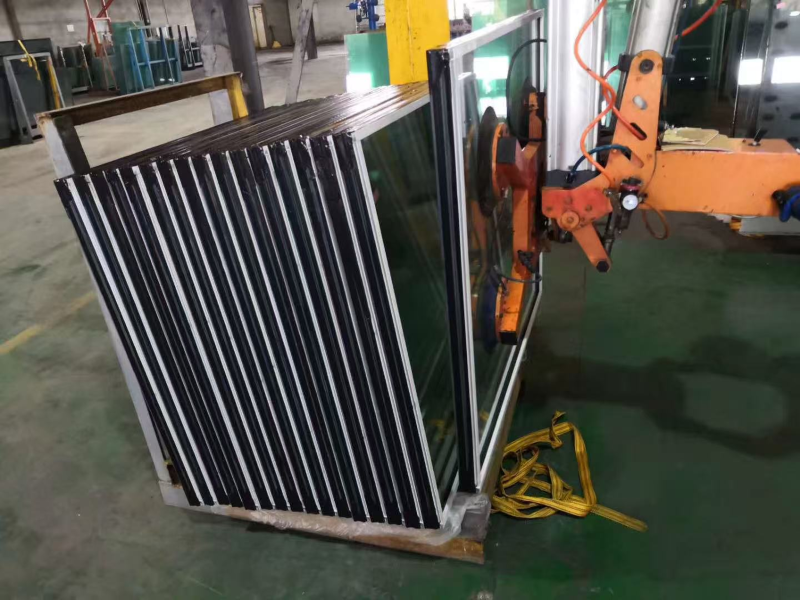
So, which is better, laminated glass or insulated glass?
First, both laminated and insulated glass offer some degree of sound and heat insulation. However, laminated glass offers excellent shock and explosion resistance, while insulated glass offers better thermal insulation. The air layer or inert gas between insulated glass reduces heat transfer, resulting in better insulation. laminated Glass has relatively weaker thermal insulation.
In terms of sound insulation, the two differ. Laminated glass, due to its superior shock resistance, is less likely to generate noise due to its own vibrations in strong winds, especially at mid- and low-frequency frequencies. Insulated glass, on the other hand, is more prone to resonance. However, when it comes to isolating external noise, insulated glass has a slight advantage. Therefore, the appropriate glass choice depends on the location. Wind Pressure Resistance: Insulated glass is filled with gas to enhance its wind pressure resistance. Laminated glass, through the combination of film and glass, also offers some wind pressure resistance, but overall is slightly inferior to insulated glass.
The most direct application of these two types of glass is in sunrooms. Sunroom ceilings are typically made of laminated double-layer tempered glass, while sunroom facades are made of insulated glass.
Laminated Glass: Suitable for locations requiring high safety, such as sunroom roofs, high-rise building doors and windows, and glass curtain walls.
Insulated Glass: Widely used in general building doors and windows, curtain walls, and partitions requiring excellent thermal and sound insulation, and is particularly suitable for locations requiring high energy efficiency.
Laminated glass is more secure and less likely to shatter in the event of falling objects. Using insulated glass for facades provides better insulation, keeping sunrooms warm in winter and cool in summer.
So, it's hard to say which is better, double-laminated insulated glass or double-laminated insulated glass. We can only say which is more in demand. Window glass is the knight that protects your home, so the one that suits your home best is the best!
